
The Natural Fragrance Fallacy
Why "Plant-Based" Doesn't Mean "Safe"
Most homeowners believe that swapping a synthetic "Ocean Breeze" plug-in for a "Lavender & Eucalyptus" essential oil diffuser is a health win, (and I commend you on the attempted upgrade). In reality however, you might just be swapping one chemical reaction for another. To your lungs and your hormones, "natural" can still be "toxic."
Why your "Plant-Based" candles are creating indoor smog.
For years, the wellness industry has told us that if it’s "plant-based," it belongs in our homes. We’ve swapped the aerosol cans for essential oil diffusers and soy-wax candles scented with pure oils.
But there is a scientific reality that "Green" marketing doesn't want you to know: Nature belongs outside. When you concentrate plant extracts (terpenes) and aerosolize them in a modern, airtight home, you aren't just creating a scent—you’re starting a chemical reaction.
The Formaldehyde Factory
Most natural scents rely on compounds like limonene (citrus) or alpha-pinene (pine). When these molecules meet the ozone present in your home, they react to form secondary pollutants, specifically formaldehyde and ultrafine particulates. Because modern "Green" homes are sealed tight for energy efficiency, these toxins don't escape; they accumulate.
The Biological Conflict
Even without the chemical reactions, "natural" fragrances are potent sensitizers. They can:
Trigger the Nervous System: Constant scent exposure keeps the olfactory system in a state of "high alert," preventing true deep rest.
Irritate the Respiratory Tract: Your lungs were designed for oxygen, not concentrated botanical oils.
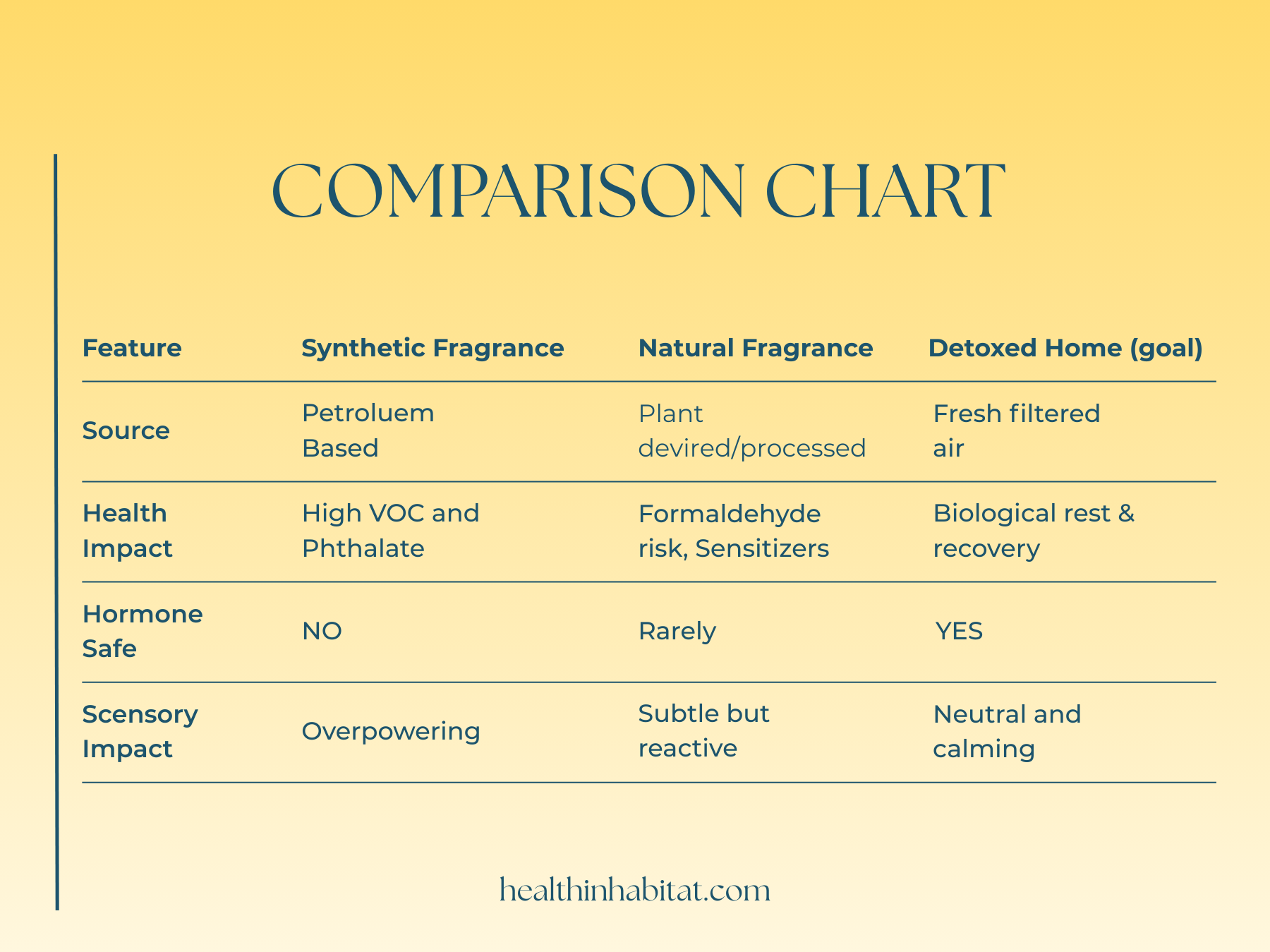
True luxury isn't a scented candle; it’s air that is so filtered and pure that it has no smell at all. The healthiest smell for a home is nothing.
the Biologically Congruent Upgrade
Stop trying to mask the "smell of life" with more chemicals. If you want your home to smell fresh, we need to look at your ventilation, your filtration, and your source materials, not your candle collection.
In a biologically congruent home, the goal is Sensory Neutrality. If you want the benefits of plants, open a window or keep live, non-scented greenery. Your home shouldn't smell like a forest; it should smell like nothing at all.
Let’s Take a slight pivot
Firelight is the best form of light at night!
Candle/firelight burns a warm, orange-red glow (1.500-1,900 kelvin), that’s basically devoid of blue light wavelengths. Candlelight is GREAT for reestablishing circadian rhythm, triggering melatonin production and mitochondria repair the old fashioned, bio-functional way.
Look for these product descriptions when shopping for low-toxin candles:
Soy wax, Coconut wax, or Beeswax
Cotton or Wooden wicks
Fragrance Free
Fragrance is a multi-faceted topic. Circle back to find future posts on safe uses for essential oils and other forms of “natural” fragrance in the home.