
The Biology of Brilliance
Is Your Indoor Lighting Sabotaging Your Sleep?
We spend roughly 90% of our lives indoors. In that time, we are constantly "consuming" light through our eyes and skin. Yet, while we obsess over the quality of our food and water, we rarely stop to ask: Is our lighting biologically congruent?
For most of human history, our internal clocks (Circadian Rhythms) were set by the rising and setting of the sun. Today, that rhythm is being fractured by a modern phenomenon known as "Junk Light."
Think of light as a "photo-nutrient." Just as your body reacts to the chemicals in a processed snack versus a home-grown vegetable, your cells react to the frequencies of light they absorb.
Eyes: These are your brain's primary windows to the world. They don't just "see" images; they act as the master sensor for your endocrine system.
Skin: We have light-sensitive receptors all over our bodies. When you sit under harsh office LEDs, your skin is "tasting" that junk light, sending stress signals to your mitochondria before you even realize you’re tired.
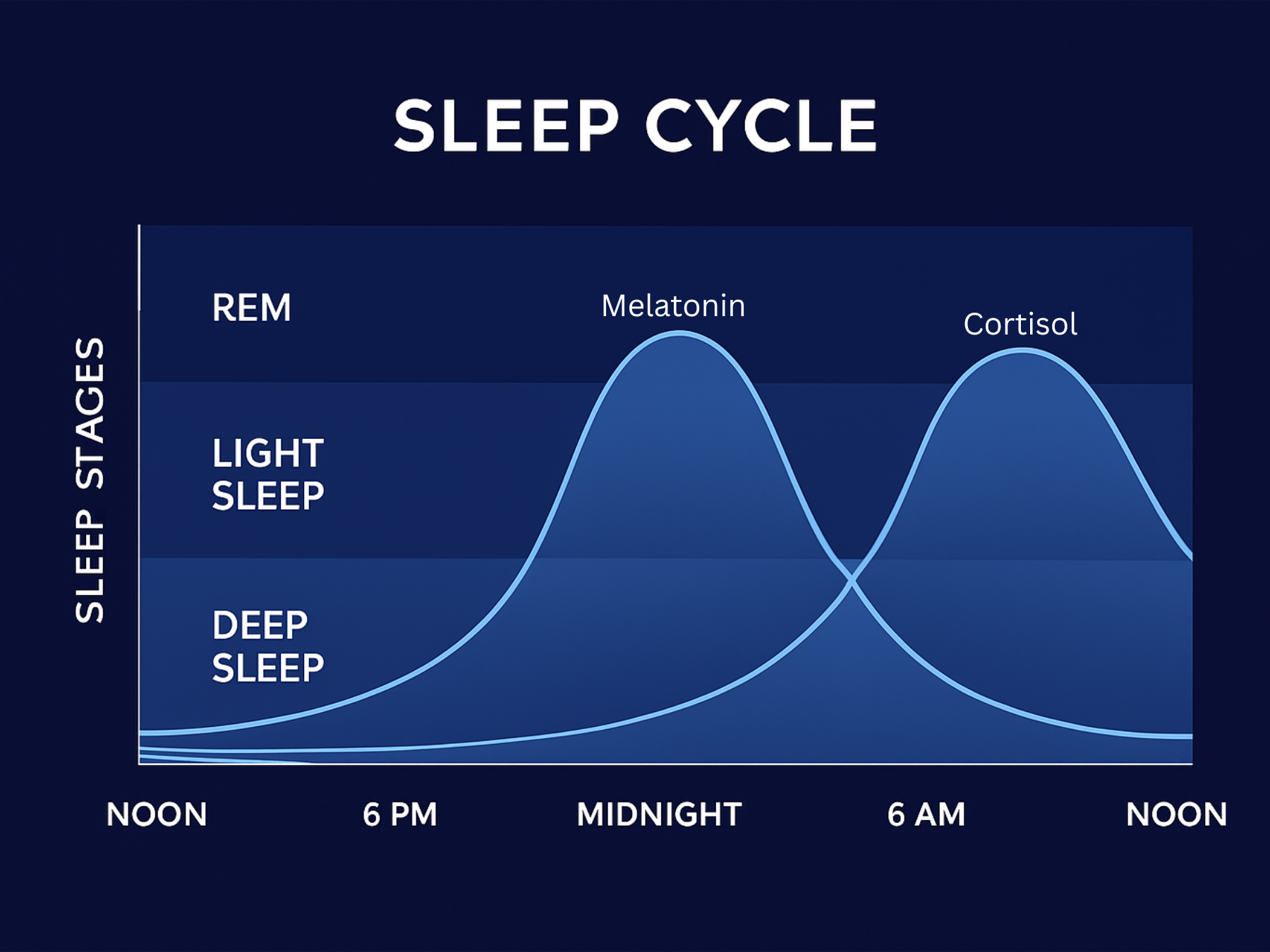
Production of cortisol (awake) and melatonin (sleep) hinge on natural light rhythms.
The Rise of "Junk Light"
If the sun is a balanced, multi-course meal, modern lighting is "High Fructose Corn Syrup." It’s engineered for efficiency and cost-savings, not for human vitality. This "Junk Light", defined by its isolated, high-intensity blue spikes and lack of restorative red frequencies, acts as a constant, low-level stressor.
By living in a permanent state of "artificial noon," we aren't just losing sleep; we are losing our connection to the very rhythm that dictates our immunity, our mood, and our longevity.
The Circadian Rhythm: Your Internal Master Clock
Every cell in your body has a clock. These clocks regulate everything from your metabolism and mood to your body temperature and sleep-wake cycle.
When blue-spectrum light hits your retina, it signals the brain that it is "high noon." This triggers a release of cortisol (to keep you alert) and suppresses melatonin (the hormone responsible for sleep and cellular repair). The problem? Modern indoor lighting keeps that "noon-day" signal active long after the sun has set.
Spectrum Comparison: Not All Light is Created Equal
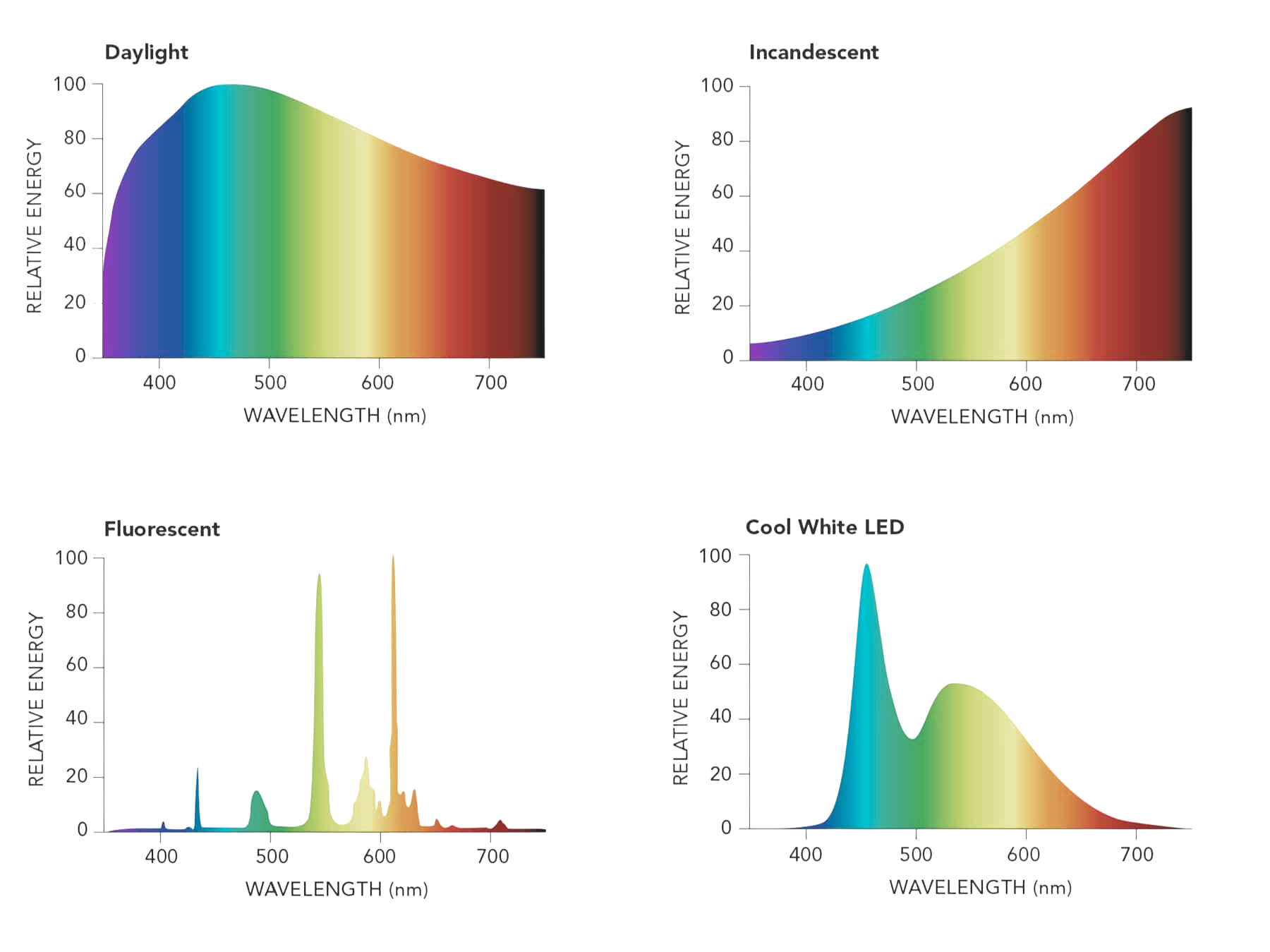
To understand why modern lighting is a health hazard, we have to look at the Spectral Power Distribution (SPD)—essentially the "ingredients" that make up the light.
Daylight: The Gold Standard
Natural sunlight is a balanced, continuous spectrum. It contains all the colors of the rainbow, including a massive amount of Infrared (red) light. Infrared acts as a biological counterbalance; it is healing, anti-inflammatory, and supports mitochondrial health.
Incandescent: The Analog Glow
Old-fashioned incandescent bulbs (and candlelight) are the closest we have to the evening sun. They have a smooth, rising slope with very little blue and a heavy emphasis on warm reds and ambers. They are "bio-friendly" because they don't interfere with melatonin production.
LED & Fluorescent: The "Junk Food" of Light
Most modern LEDs are "Blue-Pumped." To achieve a white look cheaply, they use a blue light source coated in phosphor. This creates a massive, sharp spike in the 450nm blue range and zero infrared. This unbalanced light is like eating pure sugar without any fiber; it provides a "high" of alertness followed by a crash of biological stress.
Screen Dependence: The "Second Sun"
Our dependence on smartphones, tablets, and monitors has created a "Second Sun" in our pockets. Because we hold these devices close to our eyes, the intensity of the blue light is magnified. Constant screen exposure after 8:00 PM creates a state of "Social Jetlag," where your body thinks it’s in a different time zone than your bedroom.
The Path to Light Detox
You don't have to live in the dark to protect your biology. Here’s a biological approach to lighting involves five simple shifts:
No Tinted Windows and Stop Wearing Sunglasses: Tints on lenses and windows are blocking the scant minutes your eyes are exposed to natural daylight. These are precious moments in a modern lifestyle. Don’t waste them.
Morning Sun: Get 10 minutes of direct sunlight (no sunglasses) within 30 minutes of waking up to "anchor" your clock.
Stop Wearing So Much Sunscreen: This for the same reason as tinted sunglasses and windows. Blocking the sun with chemical sunscreens is now being associated with HIGHER rates of melanoma. Turns out there’s reasons for the sun.
The Evening Swap: Replace LED bulbs in your bedroom and living room with clear, "dumb" incandescent bulbs or specialized amber "Bio-light" LEDs.
Digital Sunset: Download blue-light blocking software (like f.lux) and wear high-quality blue-light blocking glasses (orange-tinted) after the sun goes down. (See Shop)
The Consultant’s Take
"Lighting is one of the highest priorities when renovating a home for health. This isn’t just about room design; it’s more about supporting hormonal environments. Lighting is the most powerful drug in your house. Use it to heal, not to stress." - Health in Habitat